
Software for one
Anyone can now make the app for 'their job'. Developers are for the first time competing with their own users.
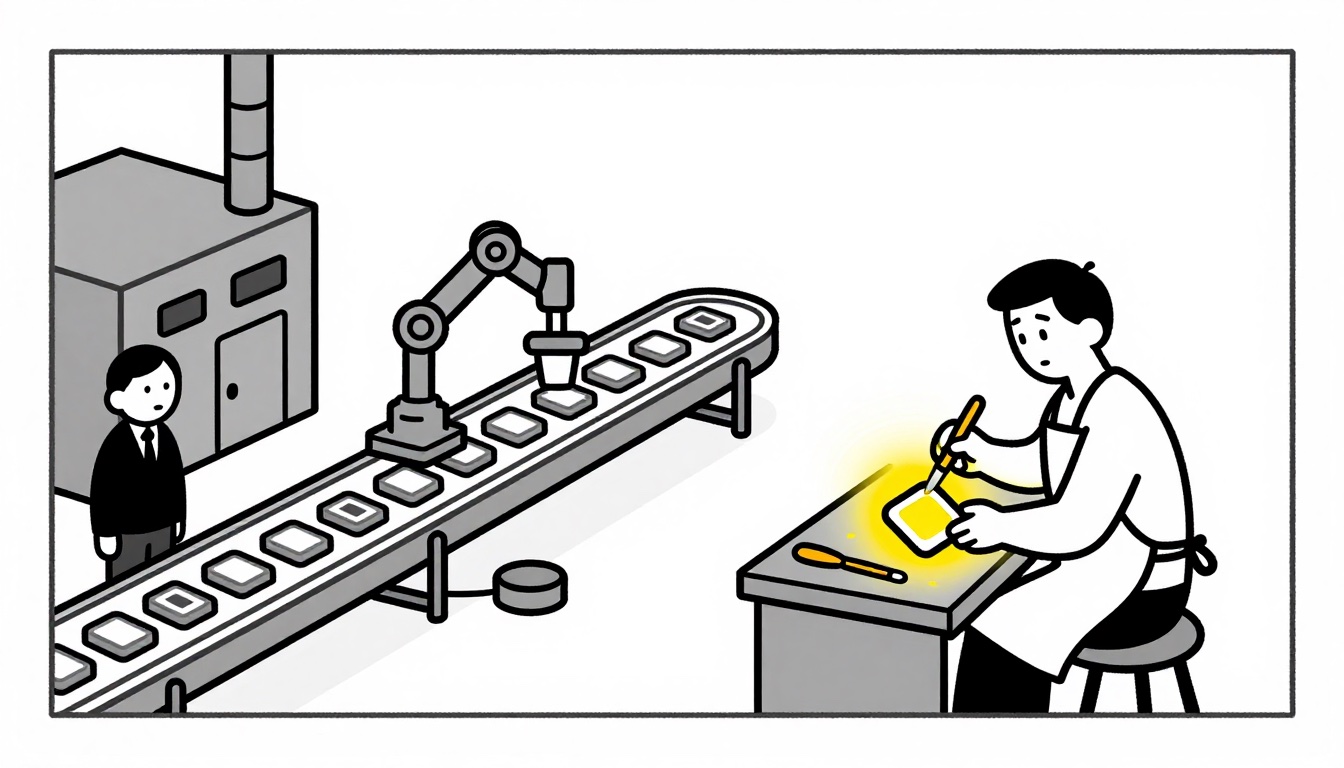
You know this person:
- they've used AI to create a custom interface - complete with personalized animations featuring their kids - for their Android TV
- they've built a full 'family OS' using AI, which tracks birthday parties, expenditure, calendar events and more - which they communicate with via WhatsApp
- they excitedly share that they've used AI to create a custom workflow that automates a boring, time-sucky job that used to take them a half day, and which is now done each morning before they log in
- their personal AI now trades their solar, buys gifts for family members, or sends alerts when their partner is nearly home
- they've been experimenting getting AI to make videos - to share a project at work, to explain a concept - with one-shot prompting
- they've decided Jira doesn't give them what they want, and they've made their own project tracker
- they've got a brain for their work - a cross between an AI assistant and an indefatigable chief of staff that basically does their job for them
- they excitedly muse about what they'll set AI loose on tonight while they're asleep
If you don't yet, you will. They're like a bunch of new recruits in the AI era, and they have one thing in common: they're making software-for-one.
Up until now software has been time-consuming and difficult to make, and the creator had to think hard not just about the problem the software solved, but about how to solve this problem in 'as universal a way as possible'. If the problem was solved well enough, for enough people, their product might find product market fit.
This orthodoxy is being challenged with astonishing speed in a world where anyone can make their own software in a matter of minutes, hours or at most days. App developers are suddenly and unexpectedly competing with...their users. Say you're an app developer with a personal finance app. Perhaps it works well, but does it help Jane Thresher, 37, a dyslexic hairdresser in Godalming, track her incomings and outgoings in a visual way? Guess what? Jane is now making her own finance tracker. Perhaps you've got a fitness app, but does it know that Daniel Bellingham, 43, who is preparing for his first Melbourne triathlon, likes to be able to visualize his meal planning alongside his training? You've just lost Daniel to his own version of your app.
App developers are suddenly and unexpectedly competing with their users.
In The Language of New Media, Lev Manovich says software falls into one of two categories: either it builds an interface to a database, or it defines a way to navigate through space. The lion's share of the software you use every day falls into the first category. Microsoft Word, Gmail, WhatsApp, Instagram, every SaaS product you have ever heard of, nearly five decades of software, in fact, one way or another facilitates the creation, storage, processing, retrieval, and display of data.
Two things are frequently true about this category, particularly when it comes to SaaS products. The first is that the engineering problems being solved do not require Linus Torvalds-level brilliance. The second is that a bunch of customers who buy the product are sitting there griping that the software doesn't do x, y, or z, or is broken in such and such a way, and if only they could write it themselves, it would do a better job. Now, with AI models, they can.
Software-for-one began as a practice for individuals, but it is quickly expanding to business.
Want a CRM that doesn't have a steep learning curve and crazy complexity because your business's setup is actually pretty simple? AI can write it for you. Want some accounting software that doesn't have a clunky interface, non-existent customer support, or force add-on after add-on at you, jacking the price each month? AI can write it for you. Want an HR tool that doesn't have opaque pricing? AI can write it for you.
Most SaaS products are well within the reach of most, if not all, AI models on the market today.
SaaS companies afraid of letting customers go will use fear-mongering to spruik the limits of artisan software, but Richard Sutton's Bitter Lesson suggests that all 'unique' centres of human cleverness - 'There's no way AI could offer what we provide...' - will eventually fall to the superior power of raw AI compute - either in the next model, or the one after that. What this means in practice is that most SaaS products are well within the reach of most, if not all, AI models on the market today, and these models will only find it easier to replicate most software with each passing month. If you doubt this, behold MeetMouse's current campaign for their Granola clone: 'Granola: $168/year. MeetMouse: $12, once'.
Which software will survive the march of the software-for-one movement? A few categories spring to mind:
- high stakes software (autonomous driving systems, air traffic control or other transport systems)
- software that benefits from network effects (even if you could write every line of code in Facebook, that won't create you the next Facebook...)
- software tied to proprietary data or content (Spotify, Disney+, Google Maps, Netflix, Bloomberg etc. all have a deeply integrated content ecosystem)
- high-cost software / difficult engineering (AI models themselves, operating systems)
- software connected to physical or regulated infrastructure (everything from Uber to banking apps)
These trees may stand tall, but around them is an unremarkable forest, quaking at the sounds of the software-for-one loggers and their newly minted chainsaws.